

A slot session budget encompasses more than just the cash you bring to play. It reflects how long that budget can realistically sustain your gaming style.
Two players may commence with identical funds but experience vastly different sessions. The explanation is straightforward:bet size, session duration, and volatility exert varying degrees of influence on a bankroll.
Effective budget management does not revolve around forcing a win. It involves setting limits that align with your desired session experience.
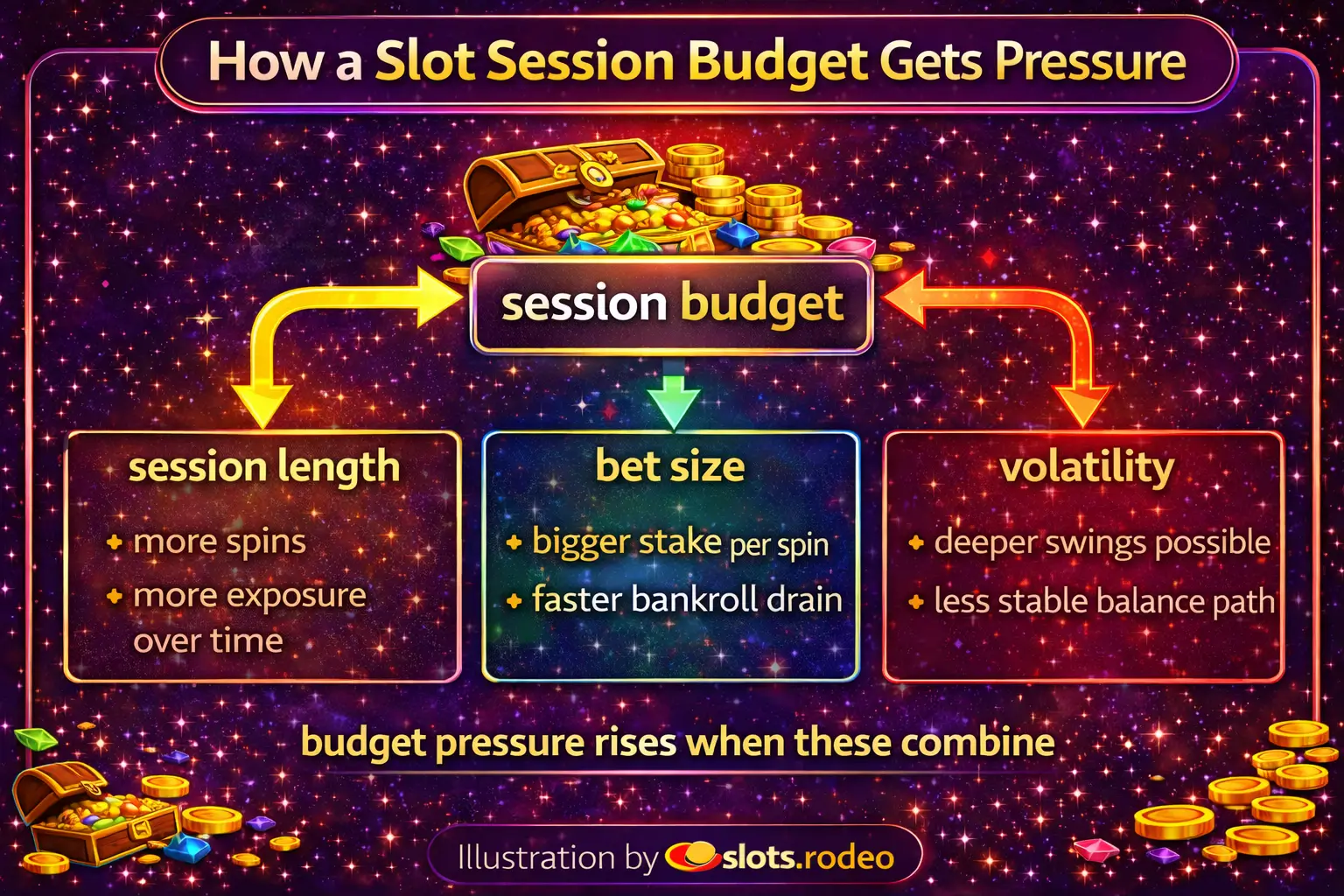
A session budget serves as a limit, not an objective
One common error among novices is viewing the budget as an amount to be entirely spent.
This perspective is misguided.
A session budget represents the maximum amount you are willing to risk in a single session. Its purpose is to manage exposure rather than compel ongoing play until the entire sum is depleted.
This approach alters your decision-making:
- you establish the budget prior to the start of the session
- you select a bet size appropriate for that budget
- you determine the intended duration of the session
- you refrain from increasing risk simply because the session is not progressing well
This constitutes proper planning. Absent this, bankroll management often devolves into reactive behavior.
Why identical budgets can lead to different outcomes
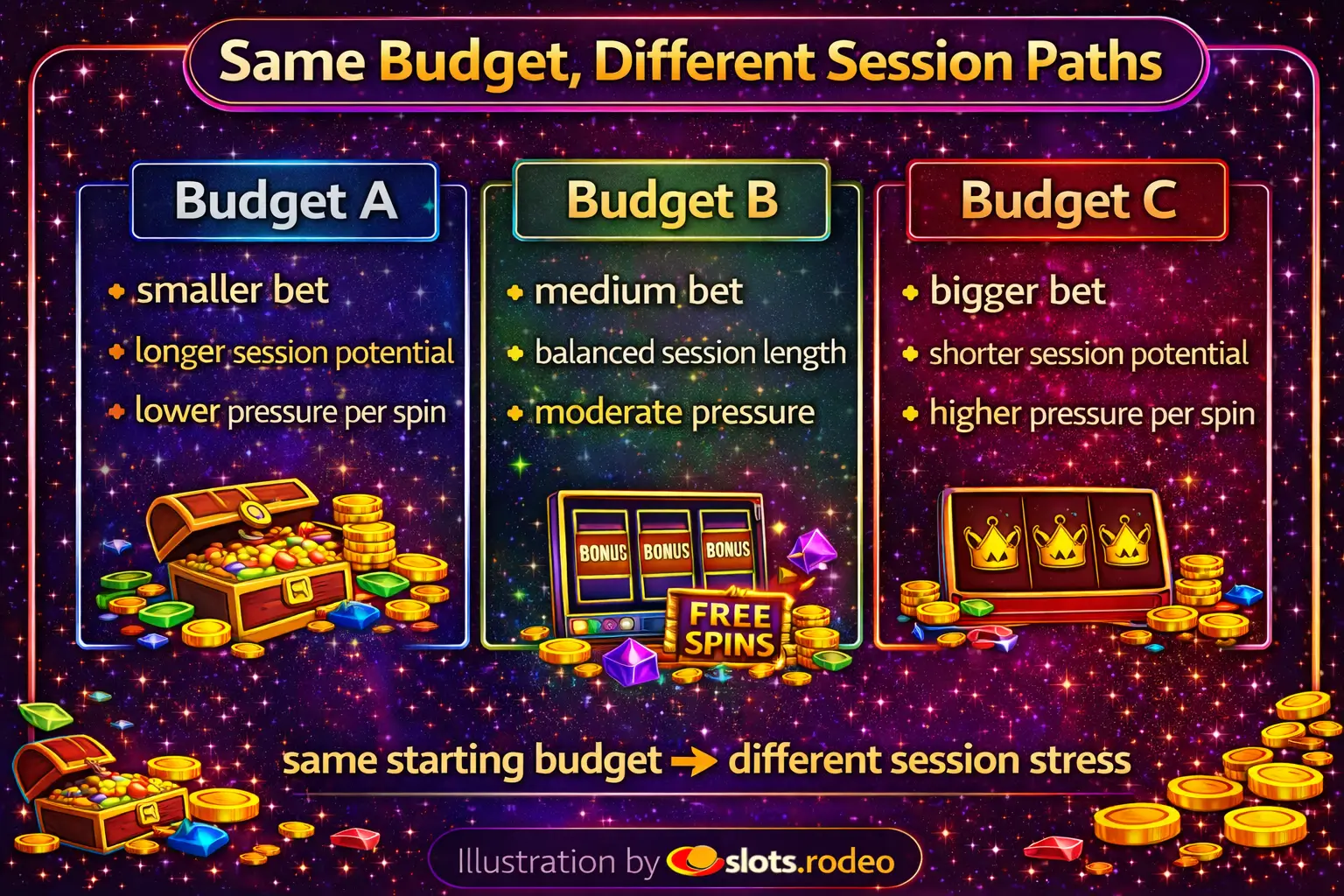
A budget alone provides limited information. The same sum can feel generous or restrictive based on its application.
Consider this straightforward comparison:
| Session budget | Bet size | Volatility | Likely bankroll pressure |
|---|---|---|---|
| $100 | $0.20 | Low to medium | Lower pressure, budget may last longer |
| $100 | $1.00 | Low to medium | Moderate pressure |
| $100 | $2.00 | High | Strong pressure, budget may shrink quickly |
| $100 | $5.00 | High | Very strong pressure, short session risk |
$100
$100
$100
$100
The key point is:bankroll strain arises from the interplay between budget and betting behaviorrather than just the budget figure alone.
Bet amount influences session longevity
Bet amount is among the most straightforward yet crucial factors.
A higher bet not only boosts potential winnings. It also limits the number of spins your budget can sustain. This results in less variance, diminished chances for bonus occurrences, and reduced ability for the session to bounce back from a downturn.
Conversely, a lower bet does the reverse. It might lessen the effect of a significant win, but it typically enhances session longevity.
A practical perspective is:
- larger bets accelerate the pace and increase strain
- smaller bets prolong time and provide flexibility
This explains why many budget issues originate from bet sizing rather than the budget itself.
Session duration is more significant than many players realize
Some players set a budget without considering session duration, leading to an imbalance.
For instance, a budget may suffice for a brief session at a specific bet level, but may be inadequate for a considerably longer session. The longer the playtime, the greater the exposure. Even if no significant events occur on individual spins, time itself increases strain.
This illustrates the benefit of planning around session duration.
Consider a practical query before playing:
Do I prefer a brief session with heightened pace, or an extended session with reduced strain per spin?
This inquiry often results in more informed choices than simply asking which game "offers higher payouts."
Volatility influences the rate at which tension can accumulate.
Volatility impacts the overall unevenness of a gaming session.
Slots with higher volatility typically condense more value into less frequent wins. This means the bankroll may experience prolonged periods of low returns before a substantial win occurs, if it happens at all within the session.
A slot with lower to medium volatility generally distributes value more evenly across smaller wins. While it doesn't ensure profitability, it can alleviate the sensation of sudden urgency.
This is significant because a budget that feels sufficient on one slot might feel considerably tighter on another.
| Volatility level | Typical session feel | Budget effect |
|---|---|---|
| Low | Smaller swings, more stable pacing | Budget may feel less stressed |
| Medium | Mixed pattern of smaller and stronger events | Moderate budget pressure |
| High | Longer dry stretches and sharper swings | Budget pressure can rise quickly |
Low
Medium
High
Volatility doesn't predict the outcome of a single session. It rather clarifies why some slots require greater bankroll endurance than others.
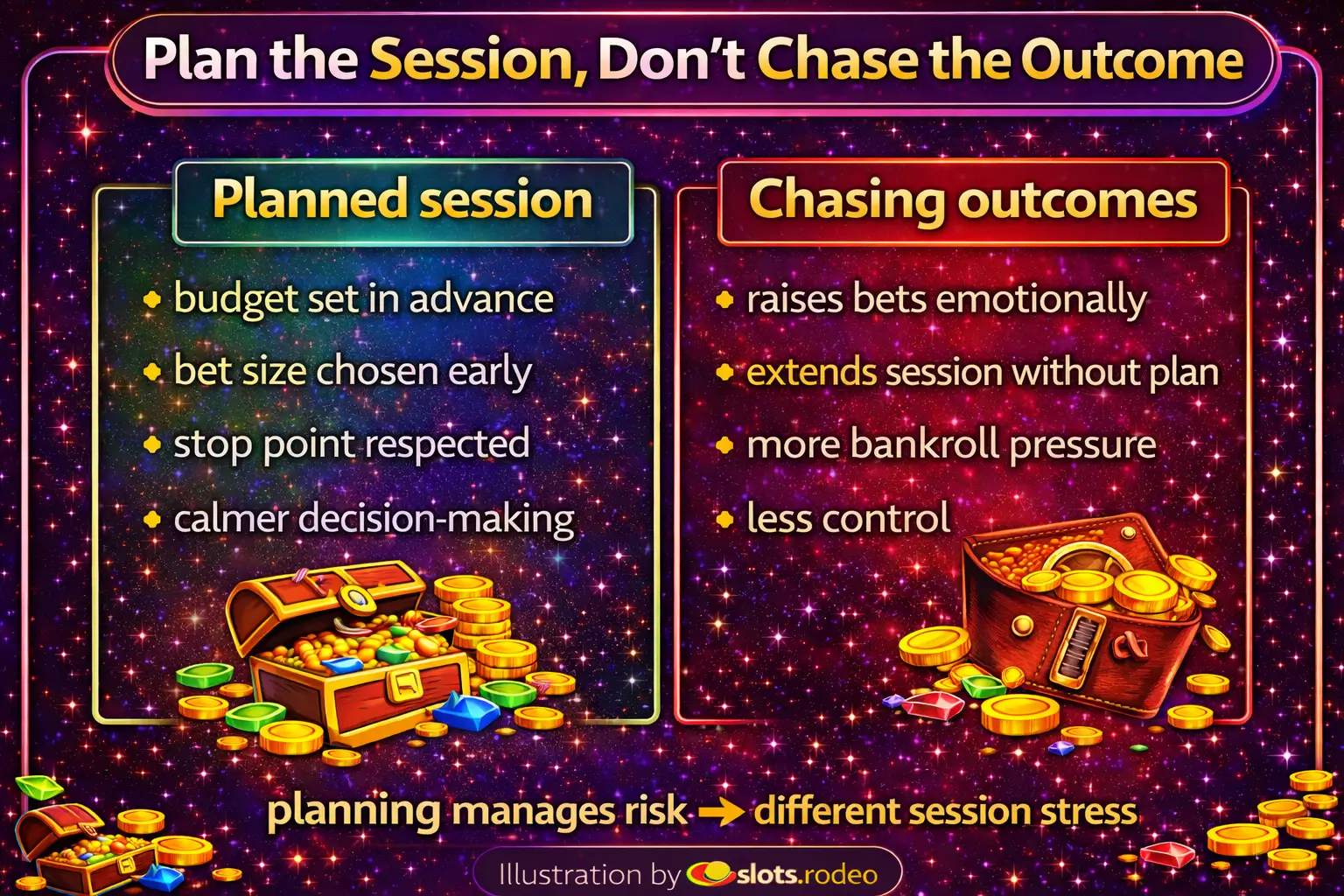
Effective budget management is more reliable than chasing outcomes.
Numerous errors during sessions occur after they have commenced.
Common scenarios include:
- increasing bets following losses
- attempting to quickly recover losses
- prolonging the session due to the belief that a bonus is imminent
- modifying the approach due to the game’s poor performance
These are not enhancements to strategy; they are responses to immediate results.
Slots are not obligated to compensate the player simply because the session started poorly. A series of losses does not indicate that a recovery is imminent. A near miss does not imply that a bonus is about to trigger. Pursuing outcomes alters the risk profile of the session, often at the most inopportune moments.
This is why having a plan is more crucial than interpreting patterns from recent outcomes.
A straightforward method to establish a session budget plan
A budget plan need not be overly complex; it should simply be in place before gameplay begins.
A fundamental framework appears as follows:
1. Determine the maximum session budget
Select the amount you are prepared to lose entirely without needing to add more funds.
2. Define the session type
Choose from the following options:
- shorter and more aggressive
- longer and more measured
3. Select a bet size that aligns with both the budget and session type
If the aim is extended play, the bet size typically needs to remain modest in relation to the overall budget.
4. Review the slot profile
Look at:
- volatility rating
- feature arrangement
- whether the game relies heavily on bonuses
- whether the structure or mechanics promote quicker, more impulsive wagering
5. Adhere to the plan during unfavorable periods
Do not allow a poor run to alter the budget strategy in the midst of the session.
Illustrative budget configurations
These examples are not definitive rules. They demonstrate how planning can influence the nature of a session.
| Goal | Budget | Possible approach | Main idea |
|---|---|---|---|
| Extended, consistent session | $100 | Lower bet size on a lower-to-medium volatility slot | Reduce pressure and extend play time |
| Moderate-length balanced play | $100 | Moderate bet size on a medium-volatility slot | Balance activity and durability |
| Short, high-risk session | $100 | Larger bet size on a high-volatility slot | Accept stronger pressure and shorter margin |
Extended, consistent session
Moderate-length balanced play
Short, high-risk session
The key isn't identifying the 'best' option, but recognizing that the same amount can perform differently based on session construction.
Indicators that your session plan may be overly aggressive
A session configuration might be too aggressive if:
- the budget begins to feel constrained very early on
- you feel compelled to increase bets following losses
- the volatility of the slot feels excessive compared to your bankroll
- the intended session duration becomes impractical at the current stake
- you depend on a single favorable feature to salvage the entire session
These are not merely emotional signals; they often indicate that the initial framework placed excessive strain on the bankroll.
What effective slot budget management truly entails
Effective budget management is often less intense than many anticipate.
It typically involves:
- setting a loss threshold prior to gameplay
- adjusting the wager according to that threshold
- aligning the slot type with the intended gaming experience
- acknowledging that variance might not align with expectations
- concluding the session without attempting to recover losses through increased stakes
This doesn't render the session thrilling in a conventional sense; rather, it instills a sense of control.
In practical terms, maintaining control is the primary objective of a session budget.
Budget considerations should be established prior to initiating play.
The most effective habit for slot budgeting is straightforward: make crucial decisions before outcomes begin to influence your mindset.
This entails pre-determining:
- the amount you are prepared to wager
- the type of experience you seek
- the appropriate bet size to achieve that objective
- whether the slot's volatility aligns with your budget
Once these factors are established, managing the session becomes simpler. You no longer react to every fluctuation but evaluate the game against your predetermined limits.
A slot session budget does not safeguard you simply because it is substantial. It offers protection when it is thoughtfully crafted to suit your actual playing style.
